 (973) 744-0804
 Pay Invoice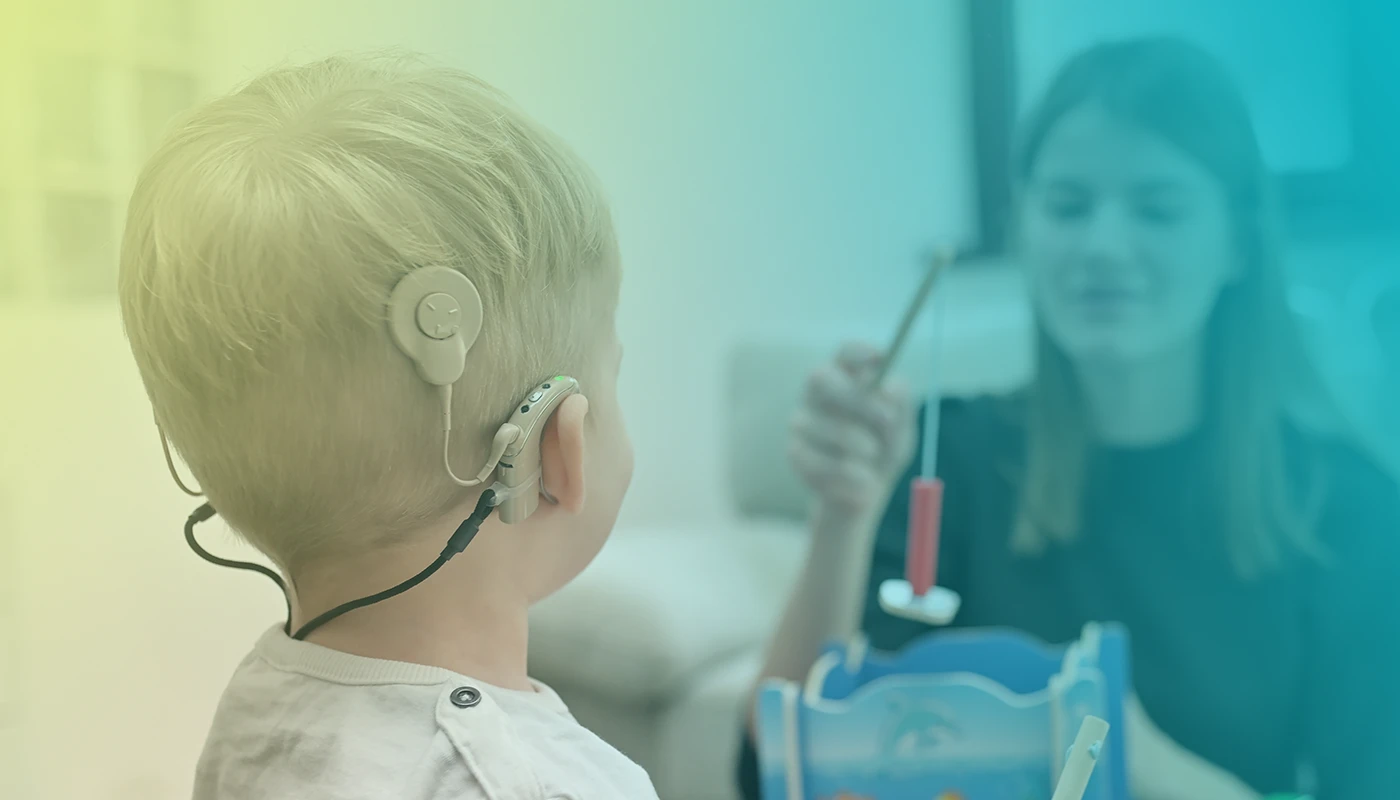
In September, we celebrate Deaf Awareness Month. It is a time to bring awareness to those who are d/Deaf and hard of hearing (HOH), support their communities, and advocate for their access to supportive services, such as speech therapy. You might be wondering, what is the Speech-Language Pathologist’s role in providing services for this population? And how does MST support this community?
What does it mean for a person to be d/hard of hearing (HOH)?
When a person is “deaf” with a lowercase d, it generally refers to people with an identified reduced hearing level. Someone who is “capital-D ‘Deaf’” considers themselves to be a part of the Deaf community, which is a group of people who identify with the same values and beliefs related to their culture, utilizing American Sign Language (ASL) as their primary language (HSDC).
When a person is HOH, they experience hearing loss within a mild to severe range (WHO). They may utilize verbal speech, they may utilize sign language, or they may use multiple modalities (i.e., modes of communicating) in their daily lives to effectively communicate.
Those who are d/Deaf or HOH may use hearing assistive technology such as hearing aids, cochlear implants, or they may not use any at all. When hearing assistive technology is not used, ASL is typically used as the primary language of the individual.
Fun Fact Did you know that sign language is different in other countries? In America we use American Sign Language (ASL). In England, British Sign Language (BSL) is used. In Mexico, Mexican Sign Language (Lengua de Señas Mexicana or LSM) is used. And the list goes on!
How do SLPs support a person who is d/Deaf or HOH?
An SLP can help clients who are d/Deaf or HOH to use functional communication skills, improve language and literacy skills, and improve listening skills (for those who use hearing assistive technology). Sessions are individualized to the clients’ needs and the family’s preferences (ASHA). Qualified SLPs can support those who are Deaf by using ASL as the primary language in which services are provided.
What a speech therapy session may look like:
- Sound Check: a quick daily test to determine if hearing aids or cochlear implants work and if the person can hear all pitches of speech.
- For the child client: The SLP may facilitate language growth by supporting the child during play-based or structured activities to learn words, to understand an ASL sign for a word, and to identify things based on hearing a word or seeing the word signed.
- For the adult client: The SLP may support language use and comprehension using multiple modalities (e.g., verbal speech, ASL, other forms of augmentative and alternative communication [AAC]) in order to support functional communication across daily activities and communication partners. If using hearing technology, the SLP may support the adult’s auditory (hearing) rehabilitation for optimizing device use during listening and communication opportunities.
- Collaboration and support for family members: the SLP will be a supportive professional to collaborate with the family and tailor sessions to address the needs of the individual client. They are also a key member of a multi-disciplinary team to collaborate with audiologists, educators, doctors, therapists, etc., to ensure the most appropriate care is provided.
Montclair Speech Therapy is a place that celebrates the diversity in our client populations.
If you are interested in finding out even more, you can contact Erika R. today!
Guest Author:
You may read Erika R.’s bio in our therapists page, or contact her via email.