
 (973) 744-0804
 Pay Invoice
Orofacial Myofunctional Disorders
Speech & Language Therapy
Request a Consultation
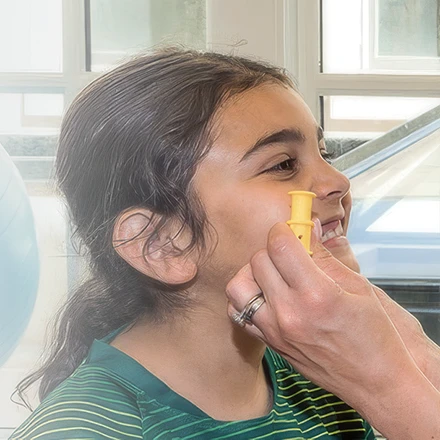
What are Orofacial Myofunctional Therapy?
Therapy uses targeted exercises to train the muscles in the mouth, tongue, and face for proper breathing, oral resting posture, speech, and swallowing. The most commonly identified disorder in this category is the tongue thrust.
Montclair Speech Therapy’s team of therapists are well experienced and trained in this area.
Typical Signs of Orofacial Myofunctional Disorders
- Persistant mouth breathing
- Incorrect tongue resting position
- Improper swallowing patterns
- Sleep disorders
- Prolonged pacifier use and/or thumb/digit sucking
Our Approach to Orofacial Myofunctional Disorders

Specialized Therapy
Our team of expert Speech-Language
Pathologists uses a multi-dimensional,
child-centered approach.

Personalized Therapy Plans
We use a wide variety of techniques,
tailoring each session to the needs of
the individual child and family.

Play-Based Activities
Our experts develop and lead engaging,
facilitative language environments that
include play and family training.
Orofacial Myofunctional Disorders FAQs
Several factors may contribute, such as prolonged thumb or finger sucking, nail-biting, pacifier use, tongue-tie, enlarged tonsils, or nasal airway blockages. Allergies and hereditary predispositions may also play a role.
Therapists will employ specific exercises to re-educate, strengthen, and normalize the muscles of the mouth, tongue, lips and face. Our therapists are part of the multidisciplinary care team involved in pre/post-operative education when release of tethered oral tissue (TOTS) is indicated.
Specialized Tools & Certifications

Insurances We Accept
In-Network Insurance Carriers*





*we accept all insurances, pending out-of-network coverage